Intro: My coaching client, Laura, recently told me that she saved more money than she spent on my coaching because I helped her simplify and consolidate her tech stack. And now I want to do the same thing for you, too. I have put out a free tool called the Tools Audit. It will help you determine what tools you use, how much you're paying, and where you can consolidate and eliminate to simplify what your small business tech stack. You can go to streamlined.fm/tools to get your free tools audit today. That's streamlined.fm/tools.
Joe Casabona: I remember the first time I experienced a generational difference in technology. I was showing my mom how to do something on our new family computer, and I was telling her to right-click and she would move the pointer with the mouse, and then click the left mouse button. And I just kept getting mad at her. Like, how could you not? I don't know how to describe this better. You— I didn't say click the right button or the other button. I just kept yelling right-click at her.
And that was the first time I knew I needed to refine my approach to teaching other people technology. I think I've come a long way in those, let's say, 25 years. Um, but that is what we are going to talk about today. Technology has permeated all of our lives, and if you want to run a successful business, you need to have some relationship with technology.
Hey everybody, welcome to the Streamlined Solopreneur, the show that helps you build better systems so you can take time off worry-free.
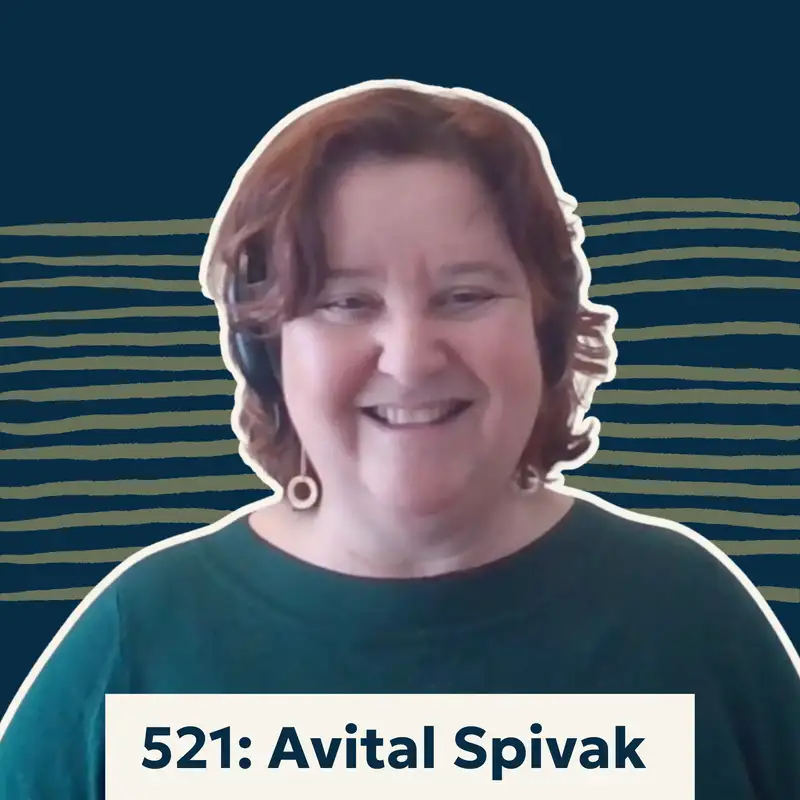
Today, my guest is Avital Spivak. She is a tech confidence coach who helps solopreneurs and seasoned professionals transform their relationship with technology while getting their systems in order. Avital, how are you?
Avital Spivak: Hey, I'm great. Thanks for having me here, Joe.
Joe Casabona: Thanks for coming on the show. I'm really excited to talk about this. Let's dive into it. I think, you know, and you obviously heard my opening story. When I was a kid, I just assumed the computer was intuitive, right? This was like 1998. But everybody has varying relationships with technology, and I think you've seen that more than most people. So what would you say is a mental hang-up, a mindset shift that people need to make when it comes to their relationship with technology?
Avital Spivak: I think, well, first I wanna say I really related to your story. Because that's the kind of thing that I meet again and again with clients who are not natives of computer land. Because you, like you said, assumed that the computer is intuitive. A lot of my clients, when they were young, there was no computer. So there's nothing to make assumptions about.
Joe Casabona: Yeah.
Avital Spivak: And then when it comes to learning it, those who went in quickly, no problem. But they rode the wave. But those who waited until there was nothing to do but like, you know, even the washing machine comes now with a screen instead of buttons. So you have to figure this thing out now.
And that makes a big difference. And teaching people that come from that generation or from not really knowing much about computer takes a different set of skills. And I love doing that. But, uh, not but the, to put it together with your question about the mental hangup, uh, for people like that, the main mental hangup, I would say, is to say, I'm too old for that. It's too late for me. Can't teach old dog new things. Even the people who are still learning and exploring and are not done by a long shot, even they think maybe it's too late for me on the computer.
Joe Casabona: Yeah.
Avital Spivak: And I would say not at all. My clients are anything between 50 and 95 so far.
Joe Casabona: Wow.
Avital Spivak: And just enjoying widening their experiences. And the thing is, the more things move, the more I see it also in younger generations.
Joe Casabona: Yeah. I mean, case in point, right? I have a master's in Software Engineering. I am a millennial. So I grew up, you know, I like, I remember Windows 95 and how revolutionary it was. And, um, but like when someone asks me to like join a Discord, right? Or I'm like, uh, Discord scares me. Right. There's like too much going on. What do I have to do on TikTok? I don't know that I— this is weird, right? Like, so it's— yeah, you do, right? There's the, there's the concept of, uh, taste lock when it comes to music, right? We're at 35 years old, you kind of stop learning new music, right? Um, I wonder if that same thing happens with technology. It's like you just get to a point where you're like I'm happy with where I am. I don't want to have to spend my time learning new stuff.
Avital Spivak: I would say that the sentence you said is quite accurate, and I want to challenge that because there's a difference between I don't want to learn new stuff " and " like I've had enough of this. And I can't learn the things I need. Huge difference.
Joe Casabona: Yeah.
Avital Spivak: And the thing is pretty cool because, okay, when you're younger, maybe you're like exploring, what's this? What's this? This new thing, this new thing, this new thing. And you run around, and you've had enough of that.
Joe Casabona: Right.
Avital Spivak: But that doesn't mean that 'Oh, I want to do this thing,' whatever that is in your life that you want to do. And maybe there's a digital side to it, and it's not late for that at all. So it makes a big difference.
And I think part of the problem sometimes, if I can go there, is that people are thinking, okay, I have a problem or I have a need. There's a tool for that. You know, there's an app for that, right? That used to be a saying. But yeah, people immediately think, " What's the tool I need? That, I would say, is the biggest hangup that I need to address with people. Because I have a need doesn't equate there's a tool, or I need a tool.
Joe Casabona: Yeah, this is, this is really good, right? Even so, when I was, uh, when I was in Software Engineering, I had a coworker who every 2 to 4 weeks would say, " Hey, this new framework just came out, we need to try it. And every time I would say, " What specific use case does this framework solve that we cannot solve with our current toolset? Right? Because if you just want to try things, do that on your own time, right? But like, I'm trying to make a piece of software that could be supported by the whole team. That is not going to crumble when some fly-by-night framework disappears.
And I think with tools, it's like what you said. I have a need is not the same as I need a tool. Those are two different things.
Avital Spivak: Yes. And I love the story because I think we might have shared the same colleague at some point. I'm a Software Engineer too, and I've had those.
Joe Casabona: Yeah.
Avital Spivak: And, and the, the learning from there was exactly like you said, what's this fly-by-night thing that disappeared? And there's, you know, like a curve, a standard curve to a tool. It comes in, it's very new, nobody's almost using it. There's no customer support, barely. Nobody knows how to use it, but it's here, and it's exciting, and there's a lot of early adopters who would go there.
And then, you know, it gets to a point where it's very popular, and everybody's rushing in, and maybe it's not gonna stick around. So for the fun of it, like you said, on your own time, yes, go ahead, check it out, jump into Discord, whatever it is.
But, um, If you're talking to me as a business owner who's trying to figure out, you know, what to use to get things done well in your business, I would say this is not the time for Discord necessarily. I mean, we're just stuck on the word Discord, but it's not yet the time to jump on whatever is the newest thing in town. And maybe we don't need anything. What's the current toolset? What do we have that might do this thing?
Joe Casabona: Yeah, absolutely. I mean, the thing that you—the— what you're describing now, I feel about, uh, OpenClaw, formerly Multibot, formerly, formerly ClawedBot, right? I think it's like— and this is not shade on the developer, right?
Avital Spivak: Not at all.
Joe Casabona: He has built something cool. Peter Steinberger is his name, and he built something very cool. And I think that lots of people are jumping on, this is the greatest revolutionary thing ever. I'm like, is it like, you have to give an AI shell-level access to your computer. And they're like, oh, and it could check in for flights for you. And I'm like, tell me where it's done that. Show me the exact time it's done that. Yeah, right, because it can and it does are two different things. So like, they're especially in the AI world, like right now we're seeing a lot of this is a revolutionary thing that's going to change how we work forever and ever and ever.
Um, but you keyed in on something here that's like, what can you solve the problem with your current tool set? Can you tell me more about that? Because I think that maybe not for the— maybe not for your clients because you serve a specific, possibly tech-averse set of clients. But I know like, there are people who are my age and slightly younger who every time a new app comes out, they've got to try it. Oh, I'm using Notion, but Obsidian looks really cool. Or, oh, I'm using Obsidian, but Roam Research is really cool. Right. So What, like, how do we, how do we evaluate if our current toolset is it versus when we actually do need a new tool?
Avital Spivak: Okay, so that again, even for my clients, that works. Because a lot of my clients are those who just like, it's overwhelming, there's just too much. Yeah, that's what I was saying. It's starting to get younger and younger because people are like, you know, I used to be able to run with it, but I can't. So what now? And now they're experiencing what the other generation experienced before, but it's coming just because there's so much happening.
So, the answer is this. For, again, if it's for your private enjoyment, Go explore, enjoy it. That's fun. But here's how I look at tools and do I have something that's already relevant? I say me and my tools, we're a team. I'm in the middle. I'm, you know, the leader of the pack. I'm in the middle, but this is my team. And anything you can think about that you know about building a team and leading a team, you can look from that experience to how you talk with your tools or check, check in with, do you have? So when I have a new need with, for my business, I don't immediately go to get a new team member. I first check, okay, who's on my team? Do they have some skills, maybe I haven't heard? Known before because I was, you know, using them in a certain position. But I can ask, maybe my team member has more skills than I know in whatever it is that they need.
And it's true with a lot of the tool platforms these days that they have a lot of capabilities that we may not remember even that they have or never knew. So it's really worth checking. Like if you are in the Google Workspace and using a whole set, there's so many apps involved and so many tools, maybe something there already does that and et cetera, et cetera.
So you wanna check in who knows who does, and if and when you are going to recruit a new team member, think about your current team. Do they fit in? Will they talk with each other? Will they share information with each other? Do they even speak the same language? Mm-hmm. With people, we almost take it for granted. With tools, we forget to ask those questions.
Joe Casabona: Yeah, this is— I mean, this is really good. This is episode 510 of this show. I did a case study episode with one of my former clients, Laura Brazon. And this was one of the things she talked about, like she was paying for an email service provider even though she just needed the free plan. Like she wasn't using anything on the paid plan. And then she was also paying for OpenAI or ChatGPT, but she was also paying for Google Workspace. And I said, you know, Gemini, I mean, I don't want to start like a flame war in the comments, but I was like, Gemini can— everything you're using ChatGPT for, Gemini can also do. Um, and so like, we were able to cut a ton of costs for her and simplify her workflow because, you know, I set up an automation that created a Google Doc, and then she could talk to Gemini inside that Google Doc. So you're absolutely right. Like, I think we accumulate tools, and then we use it for the one thing that we bought it for.
Avital Spivak: Yes.
Joe Casabona: And we don't realize that there is a treasure trove of other features that probably work better than trying to duct tape everything together.
Avital Spivak: Yes. That's a huge piece.
Joe Casabona: Yeah. So when you— so actually, I want to key on key in on something you said, which was if you are going to add a new team member, make sure it “speaks the same language”, right?
Avital Spivak: Yes.
Joe Casabona: What does that look like? I can give you a practical example, and I'd love to hear like your bigger thoughts on this. I got a reMarkable 2 mostly for typing, right? I want like distraction-free writing. In a way that I don't get on my iPad or my laptop. And so I wrote my first article. It was like 700, between 700 and 850 words. And then I thought, huh, how am I going to get this in my actual writing app? And it wasn't something I considered. I just said, well, surely it works with Google Drive and Dropbox. There's surely a way I can get this done. I did figure it out. That's coming in an upcoming episode, but, um, it's something I kind of assumed would be easy, and it wasn't quite as easy as I hoped it would be.
Avital Spivak: Brilliant example. Love it. Yeah. And, and yes, I've, I've helped a few clients integrate the reMarkable within their process. Oh, nice. Yes. So I'm familiar with some of what you're talking about. And, um, I'll give you an example that is quite common.
Somebody that has a Windows machine at home and an iPhone in their pocket. So two different worlds, the Apple world and the Microsoft world. And now we have machines that are speaking different languages. Now, where does it come to bear? Because some people would say, so what? But they have their Gmail, some kind of Google address, right? A Gmail address. And they're looking at it on their phone in the Apple app, Mail app. And they come to me, and they say, why aren't the, you know, people are sending me calendar invites, but they don't appear on my calendar. What's going on? And I start untangling with them. So not only they have the iPhone with the Mail app that's looking at their Gmail account, but it's also looking at their— if you remember that this existed— their Hotmail account or Live account, Microsoft. Let's say their Microsoft account to be—
Joe Casabona: Yes.
Avital Spivak: Okay, so they have a Microsoft account that on their machine, they look at it through an Outlook app. On their iPhone, they look at it through their mail app, the Apple Mail app. And then they have a Google account, and they're using the Google Calendar. So now we have the mail Apple app, the Outlook app, the Google Calendar, and invitations that come to their Microsoft account don't appear on their Google Calendar, and they're surprised. And this is more common than I want to, you know.
Joe Casabona: Yeah. And so what this speaks to, right, is like, because I mean, they probably didn't think about the interoperability, right? You're just saying, oh, well, I need a laptop. I have $600 to spend. This one looks good, right? Um, but you want the iPhone. I mean, like, the reason I switched from Android to iPhone was the exact reason you're talking about, right? Like, my phone did not talk to my computer in a way that I wished it had. And today I'm like, I don't, I don't know that I'd be able to leave. I don't know that I'd be able to get an Android phone now because of the fact that I could, like, take a screenshot on my phone, and it is already on my computer's clipboard, right? Like, something like that, right?
Avital Spivak: Well, that's what's happening with my Android and my Windows machine.
Joe Casabona: Yeah.
Avital Spivak: I take a picture, it's there.
Joe Casabona: Right. Which goes to another thing that you talk about, right? Which is the friction between our tools and us and technology? Can you talk a little bit about that? Because friction is a word that I use as this episode comes out, the Winter Olympics have already wrapped up, but I was thoroughly enjoying watching curling, which is all about friction control, right?
And so I'd love to hear a little bit more about like, where do you think that the friction stems from and how can we alleviate that friction a little bit?
Avital Spivak: Excellent. Love talking about that. So the friction is that what I'm calling friction is what people think of as like, oh, the computer again. Or whatever, right? The mail, the this, the calendar, the whatever it is. It's that kind of experience of— it's very low grade. I'm not talking— I mean, it can build up to like, I want to throw this thing out the window, but it starts tiny, like, oof, this again. That's as small as that.
Joe Casabona: Yeah, it's, it's like using technology feels like a chore almost.
Avital Spivak: Yes. Yeah. But where's the egg and where's the chicken here?
Joe Casabona: Yeah.
Avital Spivak: Because when you don't take care of friction, which is very common— that my soapbox, when I get on my soapbox, is, uh, Tech annoyance friction has been normalized. It's like, yep, tech is annoying. That's it. Everybody knows it. There's nothing to do about it. We're like, that again. Oof, that again.
The thing is that by normalizing it, we actually don't pay attention to it. So we're not trying to fix it or change it or anything else. We take it as a sign of normalcy. And the dread of the, that dread and that like heaviness of, oh, I, I need to do something on the computer again. A lot of the time I think it comes because we are carrying all that friction. And it's a very, uh, and how should I say this? When you take care of it when it's young, it doesn't become the thing that stops you. Because the oof, that again, that's not stopping me. I can still go. So I go, I, you know, that's how my clients say that. Who cares about that? You know, I sit with them, and we're working on a big problem they have. And I say, hey, when you went here to go to your email, you clicked 10 different things. You went to the side, and you double-click to open the window to click on a layer to click on this. And now we are in your email. Do you know that you can do that with one click? And they're like, what? It doesn't even occur to them. But every time they go to the email, it's a chore to go to the email. So maybe they don't go there as fast as they need some piece of information. They're trying to deal with it without, and then later. And then one— by the time they get it, they forgot why they went there. It's, it's, it's a self sort of— yeah, it's a snowball. It's a snowball.
Joe Casabona: Yeah, right. And it's, it's what you said is really, really smart, right? Like, if you build the foundation of a house on rotted wood, right?
Avital Spivak: Yeah.
Joe Casabona: When it comes time to replace that wood, you're going to have to fix the whole house, right? Yeah. Whereas if you make sure the foundation is strong before you build the house.
Avital Spivak: Yes.
Joe Casabona: You're going to be, you're going to be in better shape. You're not going to— when you need to fix something, you're not going to have to tear down the whole house.
Avital Spivak: Yes. And that's in the foundation. And you might not even feel friction from that.
Joe Casabona: Right.
Avital Spivak: But let's say that I don't know, you don't like washing dishes. So you use that one plate, and then you use the next plate, and then you use the next plate, and then you use the next plate. And now washing dishes looks like a really, you know, big chore. And by the time we end, the house, you know, is unmanageable.
Joe Casabona: Right.
Avital Spivak: But it's from a friction that wasn't really taken care of. Now, you might say, okay, washing dishes, I'll have to wash it again, and I will have to wash it again, and I'll have to wash. It's true, but you might be living in a better place.
But a lot of the computer friction is a much better proposition because you actually fix it so it's not a friction anymore. And then it doesn't drain you because all those little Friction things, not only they accumulate, but also it's very draining. You're excited about doing something and like, oh, that again. It's such a letdown.
Yes. It's just, it's, it's, that's the other thing with friction. When we fix those little things, like how you get places with a bookmark, let's say, or how you automate something to get there fast or to do it for you. When you do, when we do that, people are amazed. Oh my God, I didn't realize that every time I was doing this other thing that's unrelated, I was actually dreading that one step that will come later that I will have to do that other thing that has friction. It drained the whole thing. And now that we fixed that thing, I'm actually enjoying this whole huge thing that I have to do every day. I didn't even know they were related. Right?
Joe Casabona: So, I have like multiple examples here, but the one that I love playing video games, right? But I have 3 small kids. And so my time window for playing video games is sometimes small. Um, for a while I would be like, all right, I'm ready to play video games. And then I would go and I would turn on my Xbox, and the Xbox would have to update, and it would take a half an hour or an hour to do the full update. And by the end of that time, I didn't even feel like playing video games. I could have gone and played with my kids and used the hour, but like by the end, I'm like, I don't even feel like playing anymore, right? So now I know, all right, I have a long weekend coming up, right? Let me turn on the Xbox tonight. Let it update so that when I am ready, I can go play without waiting for this thing to update. Perfect. Yeah.
So how do we, what are, you know, we're coming up on like, um, towards the end of the episode here. I always like to give practical advice. Okay. So, if someone's listening to this going, "Yes, I dread doing this thing because the preamble to doing this thing is 4 other things that I didn't think about doing," what are 1 or 2 things they could do this week to reduce friction in their tech stack?
Avital Spivak: All right. So, the first thing I would say is make a little note every time you feel friction, like, oh, and the sign is very simple. Oh, that again. The again piece of it is the signal. It's not the that. It's not the this app or that app or, you know, whatever. It's the again. When you hear yourself saying like, oh, that again, that means this is on repeat.
Note it right away because you forget later. We have normalized this so much that if I asked you, give me a list of your 10 most common frictions, you may rattle a couple, but mostly you're like, what are you talking about? I'm okay with computers. But if you listen to yourself say this, like, oh, that again, or feeling it, Write it down. So that's first. Get a few of those in. You might be surprised how many times a day the same one reappears. That's a sign. Okay, so that's the first thing. Find them. And they're not as obvious as you might think.
Two is take something that's the smallest one. Like, oh, you know, take something. Not smallest, biggest. Take something and think for a moment, um, what, what would it take to get away, like, to brush this friction so it's not existing anymore? What can I change so that this doesn't occur? The surprising thing is that you would find that for a few of those things on the list, there, you already can think of something. You just never thought about it because it was so, that again, that you don't even take it up.
So look at those options. Like, okay, I have, I can do this for that. I can do this for this. I can do that. Okay. That one is 5 minutes. That one, I need to take an hour and set this thing up and send this thing. Okay. An hour, not now. Take the smallest one and fix it now. And then see what happens, because the amount of energy released from the smallest ones sometimes is enormous. That will give you momentum to take the next one up the list and tackle that.
Joe Casabona: This is really good, uh, mostly because I feel like I'm generally good at this, but You made me realize I have, this is going to get a little bit in the weeds for some folks, but I have an automation on my computer, a shortcut that runs whenever I take a screenshot, use ChatGPT to rename that screenshot something better than screenshot and then the timestamp, right? Like something descriptive, right?
Avital Spivak: I like that.
Joe Casabona: It's cool, right? The problem is that once it's renamed, it's no longer on my clipboard. And so I will take a screenshot and then go to paste it into whatever app, and I get an error that the file is not found. So as we were, as you were talking, I updated this automation to after the file is renamed, copy it back to my clipboard, right? Because this— Right? This tiny little friction meant I would paste it and then get the error, and then have to open up Finder, right? My file explorer, and then copy that screenshot back onto my clipboard again, making a half-second action 10 seconds, we'll say.
Avital Spivak: And annoying. So it drains your energy at the same time as it takes your time.
Joe Casabona: Right. And then it's like the when you walk through a doorway thing, right? You might be like, you might go to do this thing, and you're like, what was I actually trying to do? Right? Because now you've switched contexts.
Avital Spivak: Exactly. This is brilliant. Thank you for that example. I need that automation. And it's just— Tiny example. It took you what? It didn't even take your time. You're in the middle of a podcast.
Joe Casabona: Yeah, right. I was listening. I could do it while I was listening to you. Like, that's how simple the fix was.
Avital Spivak: How long has it been since it's been happening?
Joe Casabona: Oh, longer than I'd like to admit. Like, probably I'm going to say, like, since I restarted my computer a few weeks ago, maybe. Right.
Avital Spivak: And if you're taking as many scretches as I am.
Joe Casabona: Yeah, multiple times a day. Right. And I would do the, uh, that noise every time. Uh. So, yeah, I mean, as you were saying that, I was like, I know exactly what task I'm going to fix.
Avital Spivak: That's it.
Joe Casabona: Yeah. This is great. Avital, this has been fantastic. We have obviously just scratched the surface. And I think for both of us, the people listening have a lot of known unknowns, we'll say, right? They know they feel the friction, but they might not be able to verbalize it the way that you and I might be able to. So if people want to learn more about you and consume more of your content and all that fun stuff, where can they find you?
Avital Spivak: They can find me on LinkedIn with Avital Spivak. And then they can also find me at vitalweave.com.
Joe Casabona: All right. Awesome. I will link all of that in the show notes in the description below. You can find everything over at streamlined.fm.
Avital, thanks for joining us today. I really appreciate it.
Avital Spivak: Thanks, there. This was fun.
Joe Casabona: And thank you for listening. I always appreciate your time. If you liked this episode, share it. Go share it with a friend.
And until next time, I hope you find some space in your week.